
Quick answer
What to pack for the Sahara desert: comfortable layers, a warm jacket or fleece for the night (desert nights get cold), a scarf or turban, sunglasses, sunscreen, comfortable shoes or sandals and a small backpack for the night at the camp. Your big suitcase stays in the vehicle.
A night in the Merzouga dunes is one of the highlights of any trip to Morocco, but the desert has its own rules: strong sun by day, cold at night and sand everywhere. As a local company running desert tours every week, here is what to pack for the Sahara desert so you can simply enjoy it.
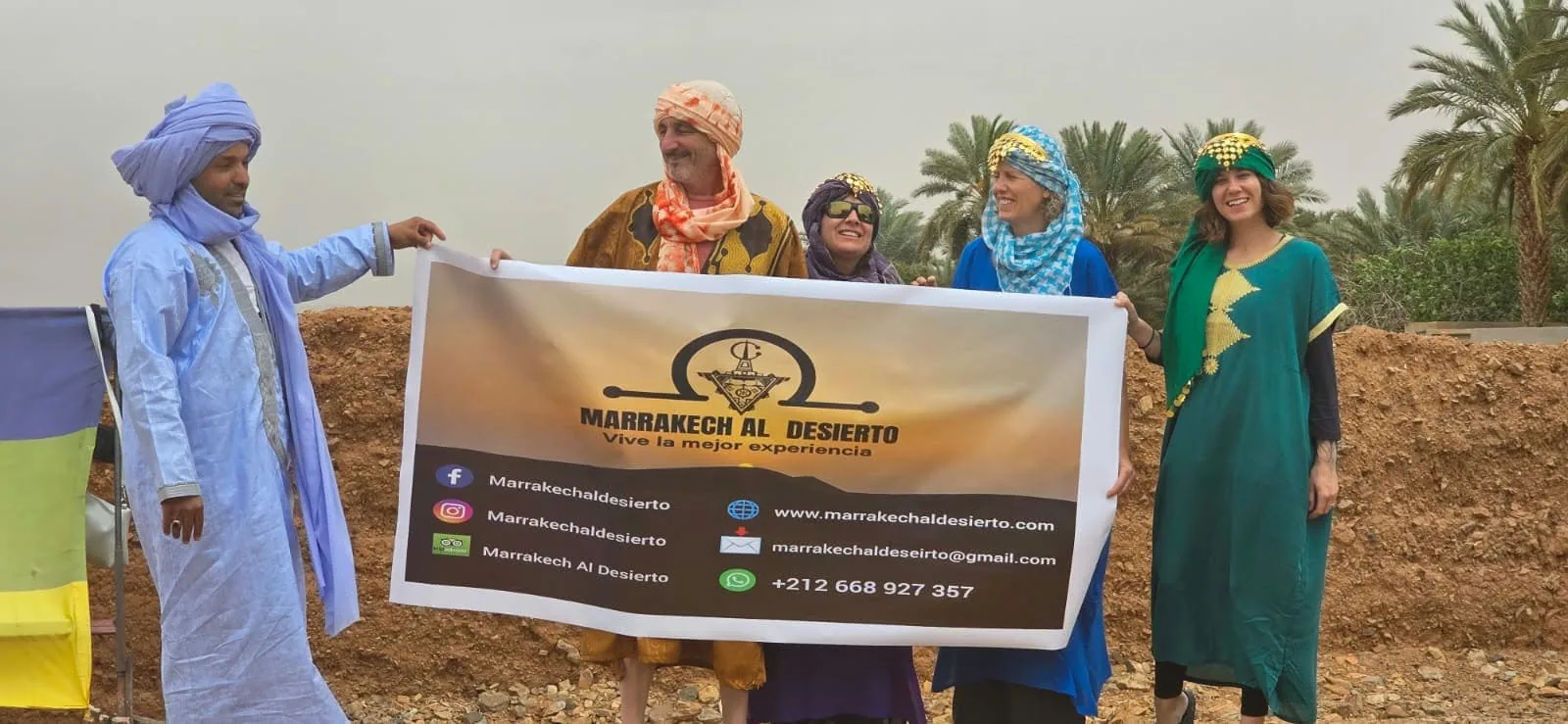
Desert clothing: day and night
- Breathable T-shirts, short and long sleeved (long sleeves protect from the sun).
- Light long trousers, comfortable for riding a camel.
- A fleece or warm jacket: temperatures drop a lot at night, especially from November to March.
- Hat and gloves in winter: nights can get close to 0 °C.
- Scarf or turban (chech): protects you from sun and sand. You can buy one on the way and your driver will show you how to tie it.
Shoes
On the dunes, sandals or bare feet are the most comfortable (the sand is cool at sunrise and very hot at midday in summer). For the rest of the trip, bring comfortable trainers for walking around the kasbahs, the Todra Gorge and the medinas.
Your overnight bag for the desert camp
You reach the camp by camel or 4×4 and your main luggage stays in the vehicle. Pack a small backpack with:
- Warm clothes for the night and a change for the next day.
- Toothbrush, wet wipes and lip balm.
- Torch or head torch and a power bank for your phone.
- A bottle of water.
- Any personal medication.
Sun protection and first-aid kit
- High-factor sunscreen and sunglasses.
- A cap or hat for the stops during the day.
- A small first-aid kit: plasters, painkillers, something for the stomach and for travel sickness (the Atlas road has many bends).
- Hand sanitiser.
What to pack by season
| Season | Day | Night in the desert | Must-have |
|---|---|---|---|
| Spring (Mar-May) | Pleasant | Cool | Fleece and sunscreen |
| Summer (Jun-Aug) | Very hot | Mild | Light clothes, cap and lots of water |
| Autumn (Sep-Nov) | Pleasant | Cool | Layers and a jacket |
| Winter (Dec-Feb) | Sunny | Very cold | Warm coat, hat and gloves |
Not sure when to travel yet? Read our guide to the best time to visit Morocco.
What to pack for the Sahara desert: our local tips
After many nights in the Erg Chebbi dunes with our travellers, these are the small things that make the biggest difference:
- A zip-lock bag for your phone and camera: fine sand gets everywhere, especially on windy afternoons.
- Wet wipes and lip balm: the desert air is very dry.
- Layers you can add and remove: the difference between midday and midnight can be more than 20 °C.
- A refillable water bottle: drink often, even when it doesn’t feel hot.
- Small change in dirhams: for tea stops, tips and souvenirs on the way.
- Patience for the road: the drive is long, so download music or a podcast for the car.
If you are still deciding which desert to visit, read our comparison Merzouga vs Zagora and our guide on how to get from Marrakech to Merzouga.
What you don’t need to bring
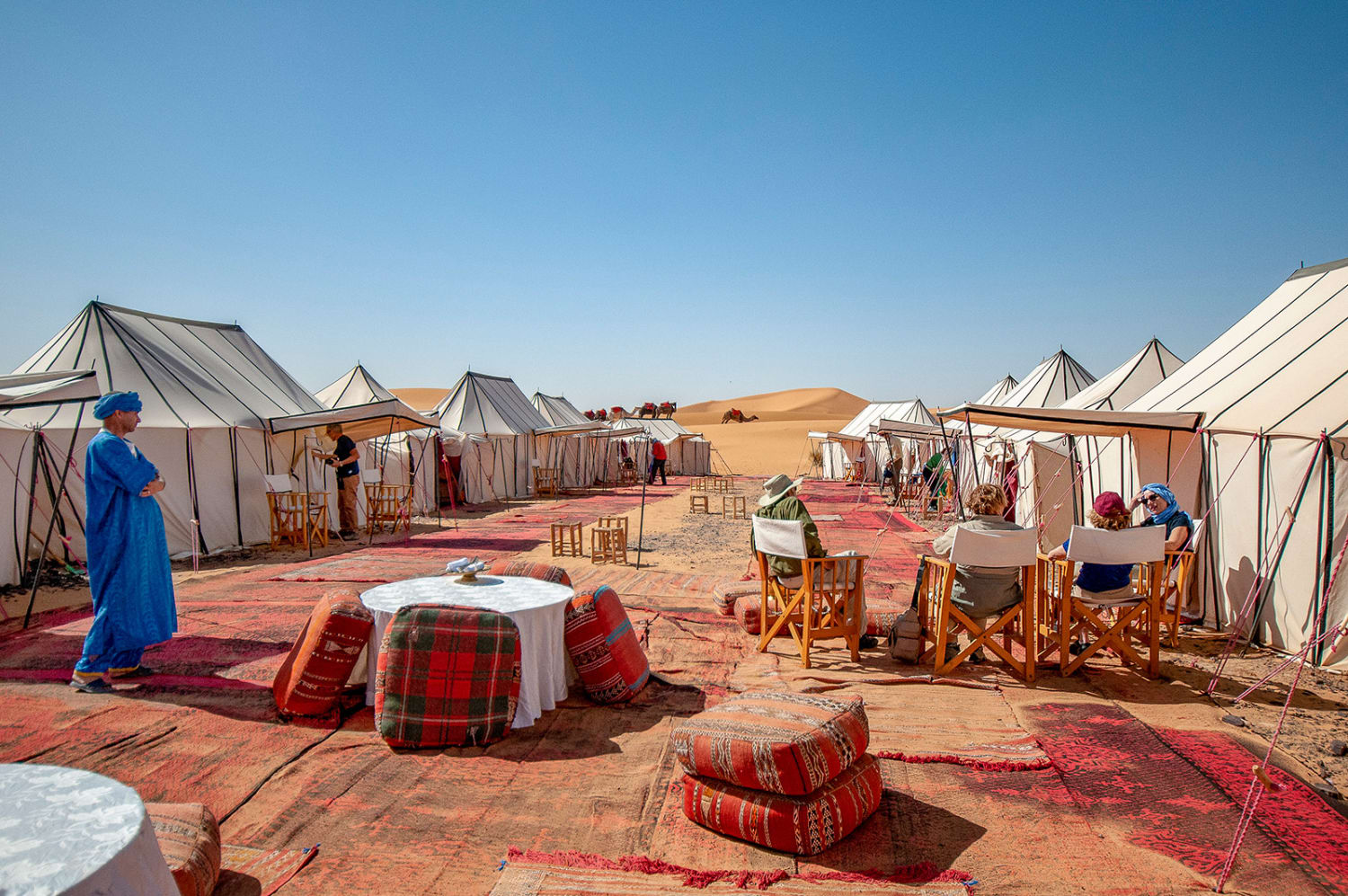
- Sleeping bag: our camps have proper beds with blankets.
- Towels: the luxury camp has private bathrooms with towels.
- Lots of cash: only for drinks, tips and souvenirs.
Desert tours from Marrakech, Fes and Tangier
- 2-day tour from Marrakech to the Zagora desert
- 3-day desert tour from Marrakech to Merzouga
- 3-day tour from Fes to Marrakech via the desert
- Merzouga luxury desert camp
Frequently asked questions
Is it cold at night in the Sahara desert?
Yes. Even when the day is hot, temperatures drop sharply at night. In winter they can get close to 0 °C, so always bring a jacket or fleece.
Can I take my suitcase to the desert camp?
It’s better not to. You ride to the camp by camel, so bring only a small backpack; your suitcase stays safely in the vehicle.
What should I wear in Morocco?
Comfortable clothes that cover shoulders and knees are the most practical and respectful choice, especially in villages and medinas. In the desert they also protect you from the sun.